Have you ever wondered how much it costs to transport your favourite biscuits or chocolate from the port to the supermarket shelves? We guess not, unless you are the one selling them. In the retail jargon, this is referred to as the cost to serve. Though technical, this analysis has strategic importance as it allows retailers to calculate their margin, define their inventory threshold and even decide on promotional actions to boost sales of specific products at given periods.
“The cost to serve is directly related to our capacity to design the best logistics solutions for our clients, allowing them to sell their products cost-efficiently and stay competitive,” underlines Dimitri Lagesse, Chief Process and Information Officer at MFD. For third-party logistics (3PL) providers, it requires a close analysis of several key components such as operational efficiency, inventory management, handling and storage processes, order fulfilment, and of course, customer satisfaction.
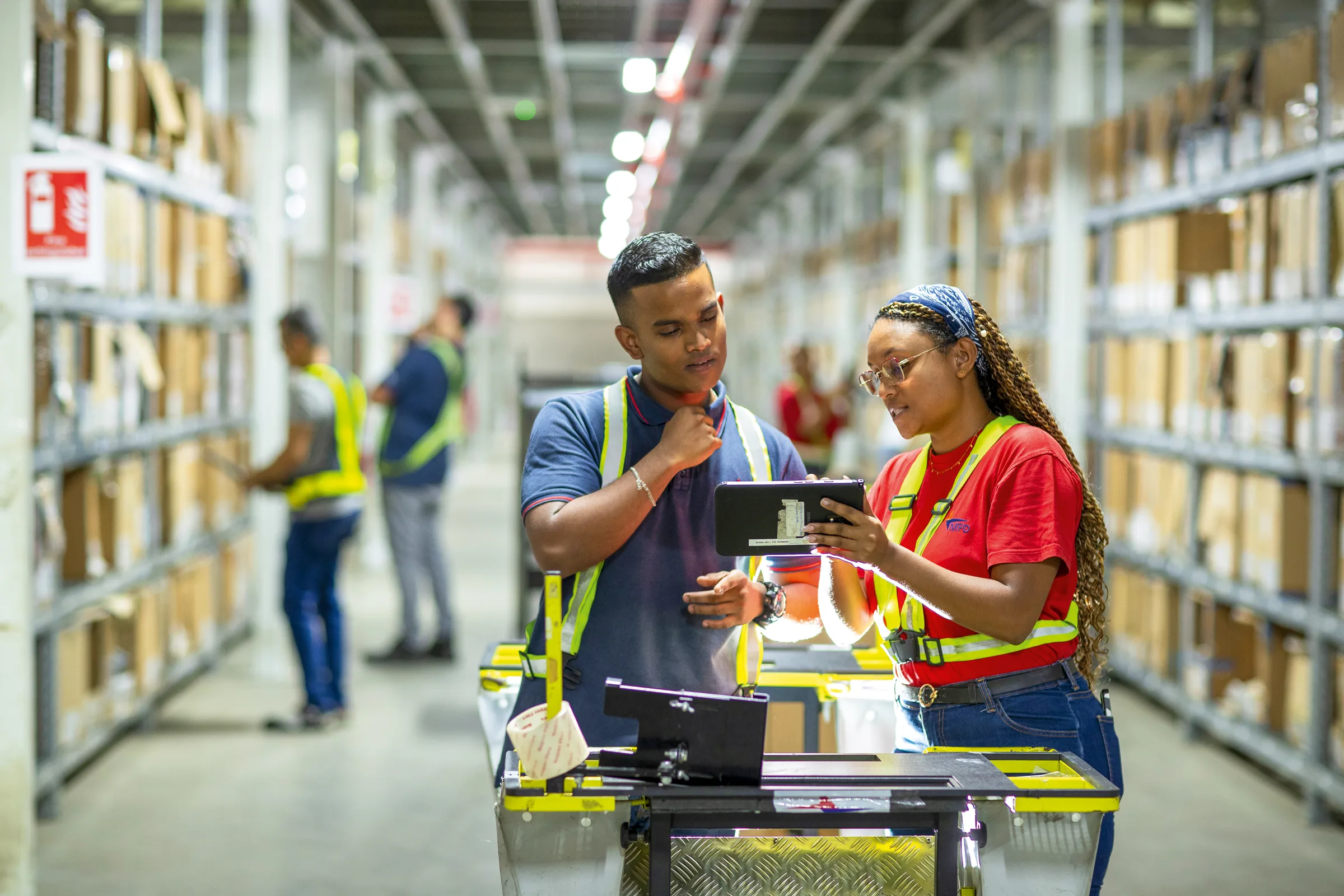
“An accurate analysis of these costs helps to identify areas of improvement in our process, our information system and our organisation at large with a view to lowering our cost to serve while streamlining our clients’ supply chain operations,” says Dimitri Lagesse. He identifies two main levers that local 3PLs can use to optimise the cost to serve. “The first one is operational excellence, the end goal of which is to see how we can do better and faster with less resources. The second one is our ability to pool resources to serve multiple clients. As 3PLs, it is one of our core expertise on which we leverage,” he underscores.
Over the years, MFD has made significant investments to continuously reduce these costs and contribute to its clients’ competitiveness, irrespective of the sector in which they operate. The internal process, for instance, has been further streamlined by the setting up of the Supply Chain Office. “It is a control tower with a dedicated team, whose job is to ensure that all information is standardised before being entered in the system. All issues are identified upstream and filtered downstream, enabling us to effectively resolve critical problems on the spot.” The control tower captures real-time operational data and uses them to provide visibility and improve decision-making.